When the Cloud Evaporates: A Case for Digital Self-Reliance in the Age of Internet Outages
The Great Disconnect of 2025
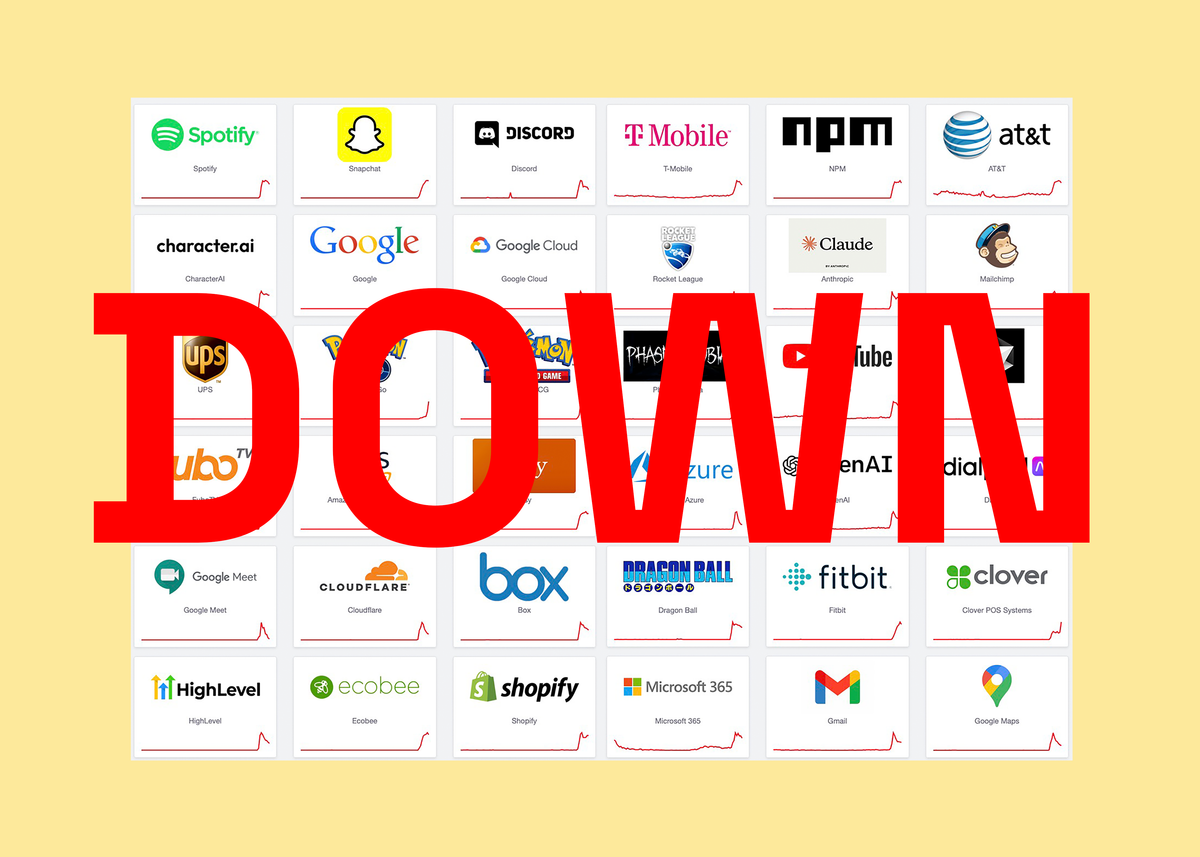
It began, as these things often do, with a ripple rather than a roar. A few error messages here, a loading screen that never resolved there. Then, like dominoes arranged with meticulous precision, the internet's infrastructure began to topple[1]. By midday on June 12, 2025, the digital landscape had transformed into a wasteland of 404 errors and spinning wheels of perpetual buffering, as Google Cloud's systems faltered and dragged down countless dependent services in its wake[2].
The outage spread with the swift efficiency of a well-rehearsed plague. Spotify fell silent. Discord's conversations were cut short. Snapchat's ephemeral messages became truly nonexistent. Character.AI's digital personalities went mute[3]. The modern world's digital nervous system experienced what can only be described as a massive stroke, leaving millions of users and businesses paralyzed in its wake[4].
"This is a Google Cloud outage," Cloudflare representatives explained to inquiring journalists, attempting to distance their own core services from the digital catastrophe unfolding across screens worldwide[2:1]. But the distinction hardly mattered to the average user, for whom the internet had simply ceased to function in any meaningful capacity[5].
As the hours ticked by, the true scale of our dependency on centralized cloud infrastructure revealed itself with brutal clarity. Businesses found themselves unable to process payments, access customer data, or maintain basic operations[6]. The modern commercial ecosystem, so proudly digital and "innovative," reverted to analog methods with embarrassing haste – handwritten receipts, cash-only transactions, and the dusty memory of how things worked before the cloud promised us convenience at the cost of control[6:1].
The Illusion of Digital Stability
Today's outage is merely the latest in a string of similar incidents that have punctuated our digital lives with increasing frequency. In April, an AWS failure disrupted cryptocurrency exchanges, revealing the ironic centralization of an industry built on the promise of decentralization[7]. In July 2021, Akamai's systems faltered, taking down websites for Amazon, Google, Verizon, and dozens of other corporate giants[8].
Each time, we express momentary outrage, perhaps tweet about the inconvenience (when Twitter itself isn't among the casualties), and then return to our cloud-dependent lives once service is restored. We accept these disruptions as the cost of doing business in the digital age – inevitable hiccups in an otherwise seamless system[5:1].
But what if they aren't inevitable at all? What if the fragility of our digital infrastructure is not a bug but a feature – a direct consequence of the centralization that has come to define the modern internet?[9]
The global, open internet finds itself at a precarious crossroads. As restrictions on internet freedoms increase worldwide and governments compete to assert authority over the digital domain, the decades-long governance system of voluntary technical bodies creaks under the strain[9:1]. Meanwhile, 3.7 billion people remain without internet access, and as they gradually come online, the world can no longer rely on American hegemony to protect the future of a truly open internet[9:2].
The Case for Digital Self-Sovereignty
There exists an alternative approach to our digital lives – one that doesn't require surrendering control to corporate giants whose business models depend on monetizing our data and whose infrastructure failures can bring our productivity to a grinding halt[10].
Self-hosting – the practice of running software services on hardware you control rather than relying on cloud providers – offers a path to digital self-sovereignty that becomes increasingly appealing with each major outage[11]. It represents a philosophical shift as much as a technological one: from convenience at any cost to control as the primary value[10:1].
When you self-host your digital life, you become the master of your own data destiny. Your files don't disappear when Google's servers hiccup. Your photos don't become inaccessible when Amazon's infrastructure falters. Your authentication systems don't fail when a cloud provider experiences an outage[10:2]. You gain not just independence but a deeper understanding of the technologies that power modern life[11:1].
Building Your Digital Homestead
The journey toward digital self-reliance begins with understanding the building blocks available to replace the cloud services we've grown dependent upon. Let's explore some of the most essential tools for constructing your digital homestead:
Your Personal Cloud: Nextcloud
At the heart of any self-hosted ecosystem sits Nextcloud, an open-source platform that replaces commercial cloud storage services like Google Drive and Dropbox[12]. More than mere storage, Nextcloud offers a comprehensive suite of applications for file synchronization, calendar management, contact organization, and collaborative document editing[13].
Nextcloud's features extend far beyond basic file storage. Its military-grade security features include end-to-end encryption, secure file sharing with flexible access permissions, and client-side protection of files[14]. For businesses, it offers advanced capabilities like file locking to prevent simultaneous editing conflicts, ownership transfer for files and folders, and integration with Microsoft applications[13:1].
What truly distinguishes Nextcloud is its commitment to compliance and data sovereignty. The platform is designed with privacy regulations in mind, providing extensive data policy enforcement, encryption, user management, and auditing capabilities that keep you in control of your information[13:2]. Unlike cloud providers who may store your data on servers around the world, Nextcloud keeps everything within your infrastructure, eliminating concerns about data sovereignty and third-party access[15].
Your Photo Library: Immich
Our digital photographs represent some of our most precious data – memories captured and preserved for future generations. Yet most of us entrust these irreplaceable assets to cloud services like Google Photos, which analyze our images with AI algorithms and use the resulting data for advertising purposes[16].
Immich offers an alternative – a self-hosted photo storage solution with a user interface strikingly similar to Google Photos but without the privacy concerns[16:1]. Developed by an electrical engineer seeking secure storage for family photos, Immich provides automatic updates on both Android and iOS, facial recognition capabilities, and AI-powered search that lets you locate images by describing their contents[16:2].
Unlike cloud-based alternatives, Immich uses your own storage – whether internal, external, or network-attached – ensuring your visual memories remain under your control[16:3]. The platform runs on modest hardware (minimum 4GB RAM and 2 CPU cores), making it accessible even to those without enterprise-grade equipment[16:4].
Your Authentication System: Self-Hosted OAuth
Authentication represents a critical vulnerability in our digital lives. When cloud-based authentication services fail, they can lock us out of multiple platforms simultaneously[17]. Self-hosted authentication solutions provide an alternative that keeps access control firmly in your hands[17:1].
Several robust options exist in this space. Authentik offers a user-friendly interface that simplifies the complex world of authentication protocols[17:2]. Keycloak provides enterprise-grade identity and access management suitable for larger deployments[17:3]. For those seeking lightweight alternatives, Authelia delivers essential authentication features without excessive resource requirements[17:4].
These self-hosted OAuth solutions support industry-standard protocols like OpenID Connect (OIDC) and SAML 2.0, ensuring compatibility with a wide range of applications and services[18]. They can integrate with existing directory services like LDAP and Active Directory, making them suitable for both personal and business use[18:1].
The benefits extend beyond mere independence from cloud providers. Self-hosted authentication gives you complete control over security policies, multi-factor authentication methods, and user access controls[19]. This level of customization allows for security measures tailored to your specific needs rather than the one-size-fits-all approach of cloud providers[15:1].
Your Compute Platform: Coolify
For those who develop software or run web applications, cloud platforms like Heroku, Netlify, and Vercel have become the default deployment targets. Yet these services represent another point of centralization and potential failure[20].
Coolify offers an open-source, self-hostable alternative to these platforms, allowing you to deploy applications to your own infrastructure while maintaining the convenience of modern deployment workflows[20:1]. Compatible with a wide range of programming languages and frameworks, Coolify can run on virtually any server with an SSH connection – from a Raspberry Pi in your home to a virtual private server in a data center[20:2].
The platform supports Git integration with both hosted and self-hosted repositories, automatic SSL certificate management through Let's Encrypt, and database backups to S3-compatible storage solutions[20:3]. Its monitoring capabilities keep you informed about deployment status, server health, and disk usage, while notifications through Discord, Telegram, or email alert you to potential issues[20:4].
The Economics of Digital Self-Reliance
The financial calculus of self-hosting versus cloud services deserves careful consideration. Cloud providers often entice users with free tiers and seemingly low monthly costs, but these expenses accumulate over time and often increase as your storage needs grow[11:2].
Self-hosting typically involves higher upfront costs for hardware and a steeper learning curve, but can prove more economical in the long run, particularly for users with substantial storage requirements[11:3]. A modest home server capable of running Nextcloud, Immich, and authentication services might cost between $500 and $1,000 initially, but eliminates ongoing subscription fees for equivalent cloud services[10:3].
For businesses, the economic benefits can be even more substantial. Consider the true cost of an internet outage for a coffee shop: lost sales ($1,000 over four hours), wasted employee wages ($192), and potential long-term customer loss ($600 in lifetime value)[6:2]. Self-hosted point-of-sale systems with offline capabilities could mitigate much of this damage, providing resilience against internet disruptions[6:3].
The economics extend beyond direct costs to include the value of data privacy and control. When you self-host, you eliminate the risk of a cloud provider analyzing your data for advertising purposes or complying with government requests for information[10:4]. This privacy benefit, while difficult to quantify financially, represents a significant value proposition in an era of increasing surveillance capitalism[19:1].
The Security Equation
Critics of self-hosting often cite security concerns, arguing that cloud providers employ security experts and implement protections beyond the capabilities of individual users[15:2]. This perspective contains some truth but oversimplifies the security equation.
Self-hosted environments allow for customized security protocols tailored to specific requirements rather than the generalized protections of cloud services[15:3]. By keeping data and applications within your infrastructure, you reduce the attack surface available to malicious actors – there are simply fewer external access points to exploit[15:4].
For organizations in regulated industries, self-hosting can simplify compliance with privacy regulations like GDPR, HIPAA, and FedRAMP[15:5]. With complete control over data location and processing, companies can implement the specific controls required by these regulations without depending on a cloud provider's compliance measures[19:2].
The security calculus ultimately depends on your technical expertise and resources. Cloud providers do offer robust security measures, but they also present attractive targets for attackers due to the concentration of valuable data[15:6]. Self-hosting distributes this risk, potentially making your data a less appealing target while giving you greater control over security measures[15:7].
The Human Factor: Learning and Growth
Perhaps the most overlooked benefit of digital self-reliance is the knowledge gained through the process. When you self-host your digital life, you develop a deeper understanding of the technologies that power modern existence[11:4].
This knowledge has value beyond the immediate practical applications. It fosters a mindset of ownership and agency in the digital realm – a perspective increasingly rare in an era of black-box algorithms and inscrutable cloud services[10:5]. Understanding how your digital tools function empowers you to make informed choices about technology adoption and use[11:5].
The learning process also builds resilience. When problems arise (as they inevitably will), self-hosters possess the knowledge and skills to diagnose and address issues rather than helplessly awaiting resolution from a distant corporate support team[10:6]. This self-sufficiency proves particularly valuable during widespread outages like today's, when cloud support systems become overwhelmed with requests[5:2].
The Path Forward: Balanced Digital Citizenship
The case for digital self-reliance doesn't require absolute rejection of cloud services. Rather, it suggests a more balanced approach to our digital lives – one that thoughtfully evaluates the trade-offs between convenience and control, between immediate ease and long-term resilience[10:7].
For some applications, cloud services may remain the most practical option. For others, self-hosting offers compelling advantages in privacy, control, and independence[10:8]. The key lies in making these choices consciously rather than defaulting to cloud solutions for all digital needs[11:6].
As today's outage demonstrates with painful clarity, our current level of dependency on centralized cloud infrastructure creates systemic vulnerabilities[1:1]. By diversifying our digital portfolios to include self-hosted services alongside thoughtfully selected cloud options, we can build more resilient digital lives and communities[9:3].
The internet was originally conceived as a decentralized network capable of withstanding significant disruption[9:4]. Over time, economic and technical forces have pushed it toward increasing centralization, creating the vulnerabilities exposed by today's outage[5:3]. Through digital self-reliance, we can reclaim some of the resilience inherent in the internet's original design while maintaining the conveniences of modern digital life[10:9].
In the end, the question isn't whether cloud services or self-hosting is universally superior. It's about finding the right balance for your needs and values – a balance that acknowledges both the convenience of the cloud and the sovereignty of self-reliance[10:10]. As we collectively recover from today's digital disruption, perhaps it's time to reconsider where that balance should lie[1:2]
- https://techcrunch.com/2025/06/12/a-lot-of-the-internet-is-down-right-now/ ↩︎ ↩︎ ↩︎
- https://techcrunch.com/2025/06/12/google-cloud-outage-brings-down-a-lot-of-the-internet/ ↩︎ ↩︎
- https://mashable.com/article/google-down-cloudflare-twitch-character-ai-internet-outage ↩︎
- https://9to5mac.com/2025/06/12/psa-widespread-internet-outage-affects-spotify-google-discord-aws-cloudflare-more/ ↩︎
- https://www.bleepingcomputer.com/news/technology/google-cloud-and-cloudflare-hit-by-widespread-service-outages/ ↩︎ ↩︎ ↩︎ ↩︎
- https://tachus.com/the-true-cost-of-an-internet-outage-for-your-business/ ↩︎ ↩︎ ↩︎ ↩︎
- https://www.disruptionbanking.com/2025/04/17/aws-outage-disrupts-crypto-exchanges-exposing-centralized-risks/ ↩︎
- https://www.foxbusiness.com/technology/akamai-outage-hits-multiple-companies ↩︎
- https://institute.global/insights/tech-and-digitalisation/open-internet-brink-model-save-its-future ↩︎ ↩︎ ↩︎ ↩︎ ↩︎
- https://www.ilounge.com/articles/self-hosted-vs-cloud-hosted-which-box-alternative-offers-better-control ↩︎ ↩︎ ↩︎ ↩︎ ↩︎ ↩︎ ↩︎ ↩︎ ↩︎ ↩︎ ↩︎
- https://blog.openreplay.com/cloud-hosting-vs-self-hosting/ ↩︎ ↩︎ ↩︎ ↩︎ ↩︎ ↩︎ ↩︎
- https://nextcloud.com/features/ ↩︎
- https://nextcloud.com/files/ ↩︎ ↩︎ ↩︎
- https://www.tomsguide.com/reviews/nextcloud-review ↩︎
- https://www.planetcrust.com/privacy-benefits-self-hosted-enterprise-computing-solutions ↩︎ ↩︎ ↩︎ ↩︎ ↩︎ ↩︎ ↩︎ ↩︎
- https://techpp.com/2025/05/20/immich-google-photos-alternative/ ↩︎ ↩︎ ↩︎ ↩︎ ↩︎
- https://www.reddit.com/r/selfhosted/comments/1axb234/what_oauth2_solutions_are_rselfhosted_approved/ ↩︎ ↩︎ ↩︎ ↩︎ ↩︎
- https://supertokens.com/blog/self-hosted-authentication ↩︎ ↩︎
- https://goauthentik.io/blog/2024-07-11-identity-self-hosted-or-in-the-cloud ↩︎ ↩︎ ↩︎
- https://coolify.io/docs/api/operations/6a4ec9fed1aad7b0b38356c47d7ac509 ↩︎ ↩︎ ↩︎ ↩︎ ↩︎